

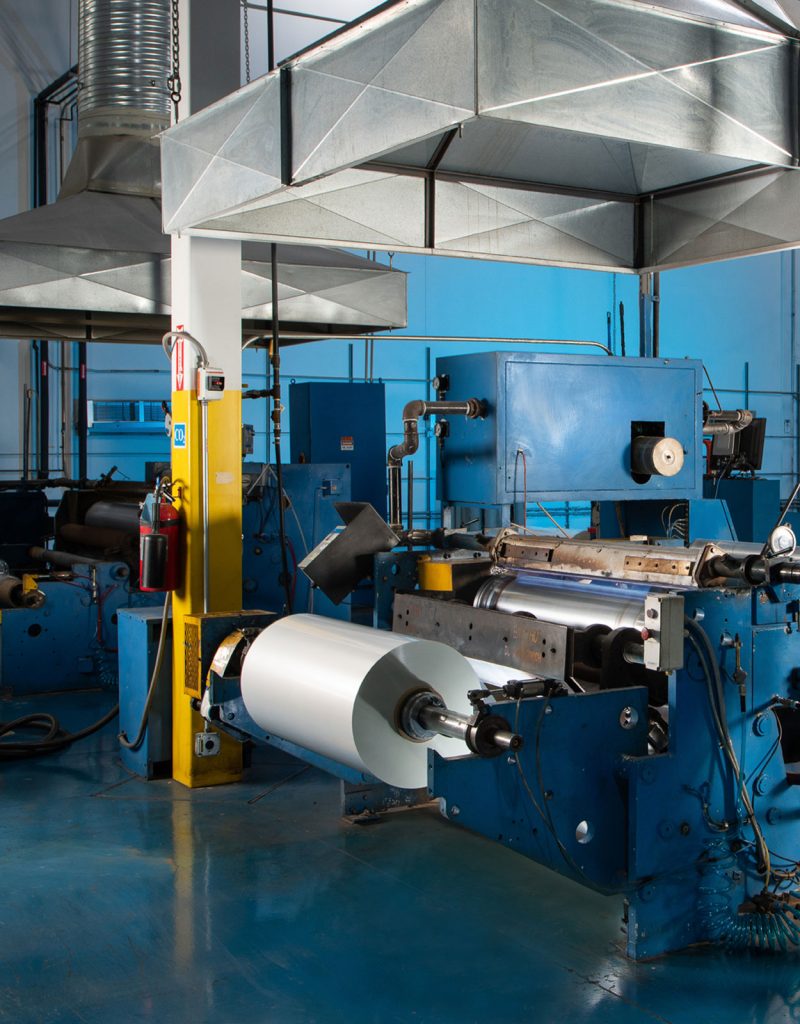
Thermal Perforation (Flame Perforation)
The combination of large hole size and density allows us to achieve up to 30% void on select materials. Holes sizes typically range from 250 microns to 1,500 microns in diameter. Perforation densities can reach up to 2,000 holes per square inch, providing exceptionally high open area while maintaining a uniform, repeatable pattern.
Thermal and Flame Perforation Applications
Medical-wound dressing layers and bandages
We use our thermally perforated Polyester and Polypropylene flexible films as the contact layer for wound dressings. The soft perforated film provides a porous interface between the skin surface and the absorbent inner layer of the dressing. This results in the efficient absorption of exudate away from the wound which aids in rapid healing.
Sachets for scented beads or granules that require diffusion to air or suspension in liquid
Custom perforation patterns can ensure your product stays securely inside the perforated sachet, yet permit the controlled release of the ingredient essence to the outside environment when appropriate.
Tobacco leaf bobbins
Our thermally perforated films are used as carrier bobbins for Tobacco leaves that are transported from the growing fields to the Cigar making facilities. The very high porosity of these films ensures that the leaves are transported safely and that the appropriate level of moisture is maintained during transportation and storage.
Roofing materials
Thermal perforated films enhance the durability of commercial and residential roofing materials by securely binding granules to the asphalt coated base material.
Material Requirements for Thermal Perforation
Thermal perforation requires a bi-oriented base film. Compatible materials include:
- Bi-oriented Polyethylene Terephthalate (BoPET)
- Bi-oriented Polypropylene (BOPP)
- Bi-oriented Nylon (BON)
- Bi-oriented Polyethylene (BOPE)
Let’s Discuss Your Thermal Perforation Application
Call us at (630) 554-0010 or Contact us today to discuss your material, hole size, perforation density and application requirements.